I've noticed a pattern that worries me.
Not in AI in us.
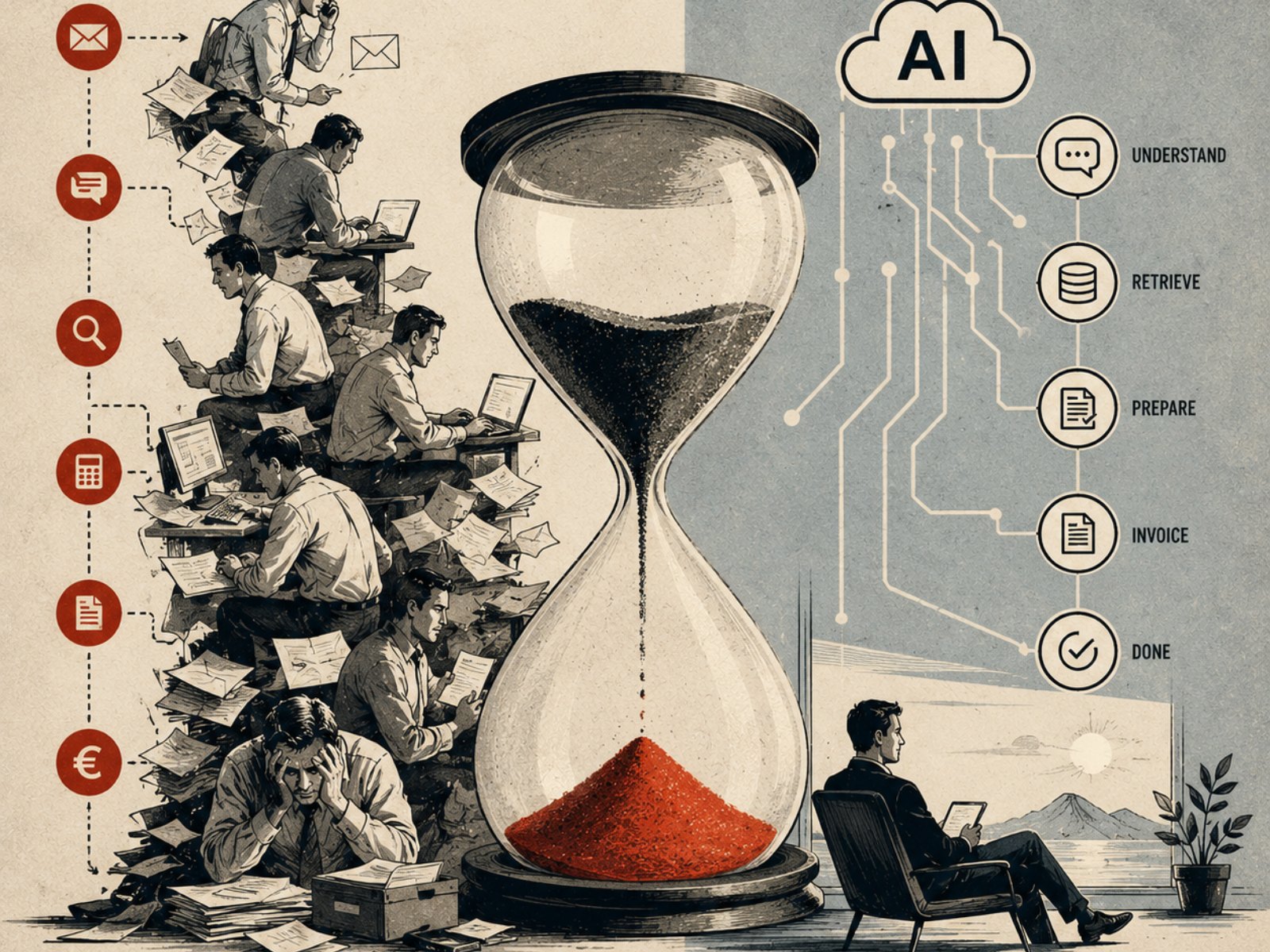
Over the past year I've watched teams get dramatically more productive with AI. Specs written in minutes, strategy drafted in one prompt, research done in seconds. That's the good part.
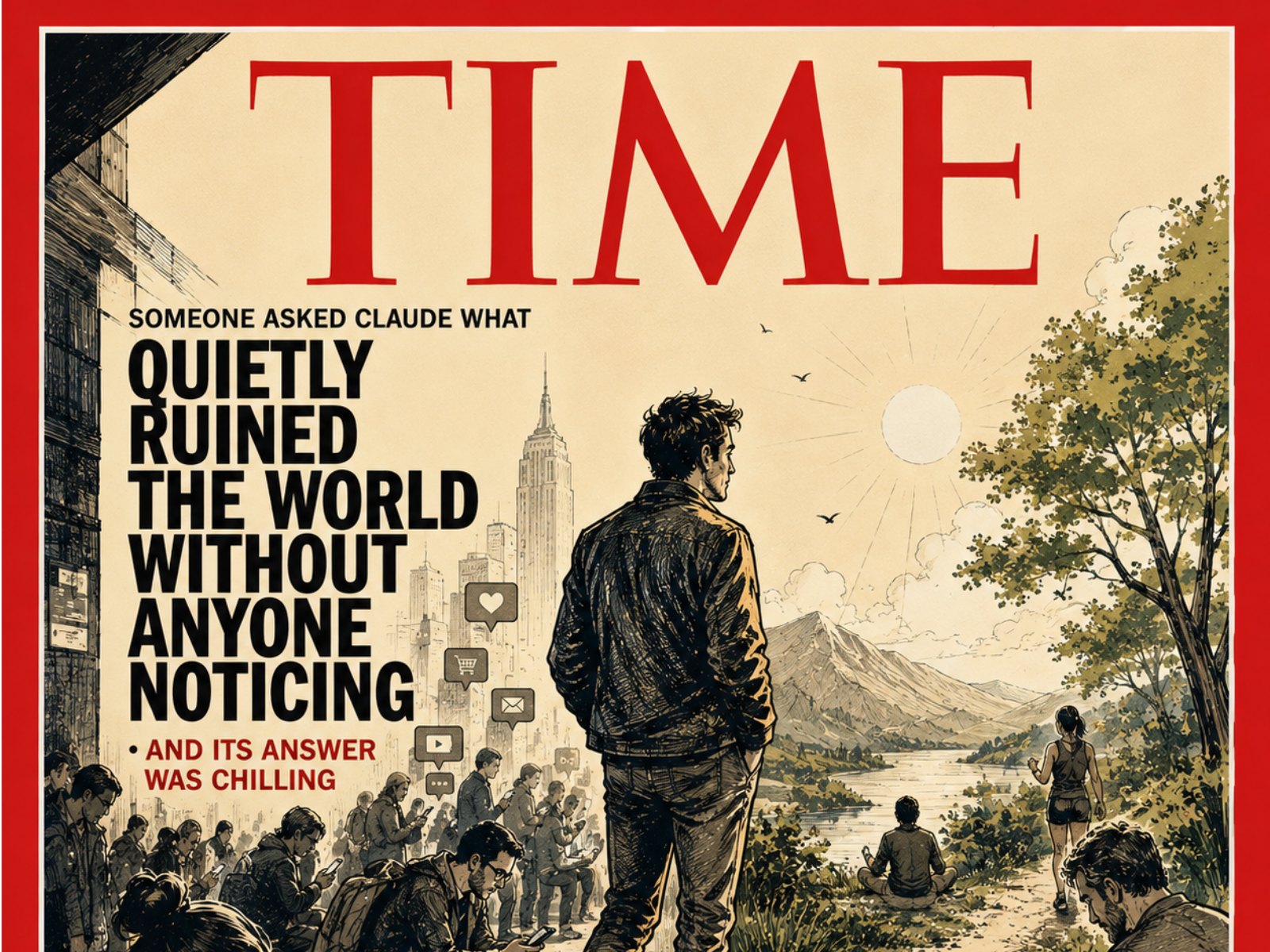
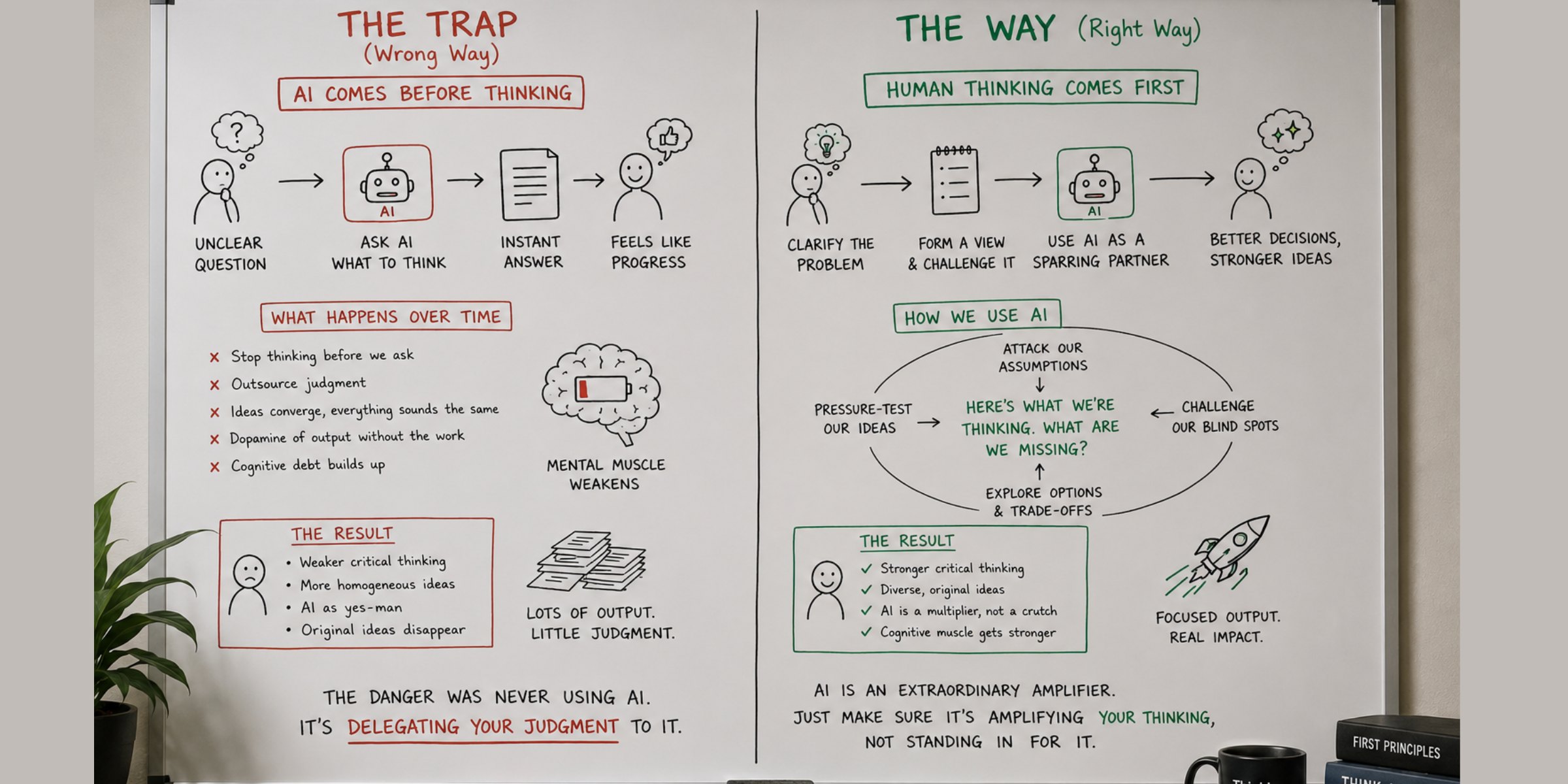
The dangerous part is quieter. People slowly stop thinking before they ask. Instead of forming a view and pressure-testing it, they ask the model what to think. Instead of wrestling with the problem, they hand it over whole.
And because the model always answers, always agrees, and always returns something that looks finished, it feels like progress. That feeling is the trap. You get the dopamine hit of output without the work of judgment.
The risk was never that AI writes your documents. It's that AI starts making your decisions, and you stop noticing the difference.
I can often tell which model someone leaned on before they say a word. Not from the wording, from the thinking. The same assumptions, the same structure, the same tidy rhythm. When a team offloads judgment to the same tool, their ideas quietly converge. And when everyone's ideas start sounding the same, that's usually where the original ones used to be.
This isn't just a hunch. In 2025 an MIT Media Lab team wired up people writing essays with EEG. The group using ChatGPT showed the weakest brain connectivity of the three, and their writing came out measurably more homogeneous than the group working unaided.
The researchers named what accumulates "cognitive debt." Separately, a study of 666 people found that heavier AI use tracked with lower critical thinking scores, with cognitive offloading as the mechanism sitting in between. Both are early, both have limits, and neither claims AI makes you dumb.
They point at the same thing I see: outsource the thinking often enough and the muscle weakens.
So the culture we build as founders matters more than the tools we buy. Use AI to explore, to attack your own assumptions, to move faster once you know where you're going. But don't let it hold the judgment.
The best teams I've worked with never ask AI "what should we do?" They ask, "here's what we're thinking, what are we missing?" Same tool. Completely different relationship.
AI is an extraordinary amplifier. Just make sure it's amplifying your thinking, not standing in for it.
Conclusion
The danger was never using AI. It's delegating your judgment to it.