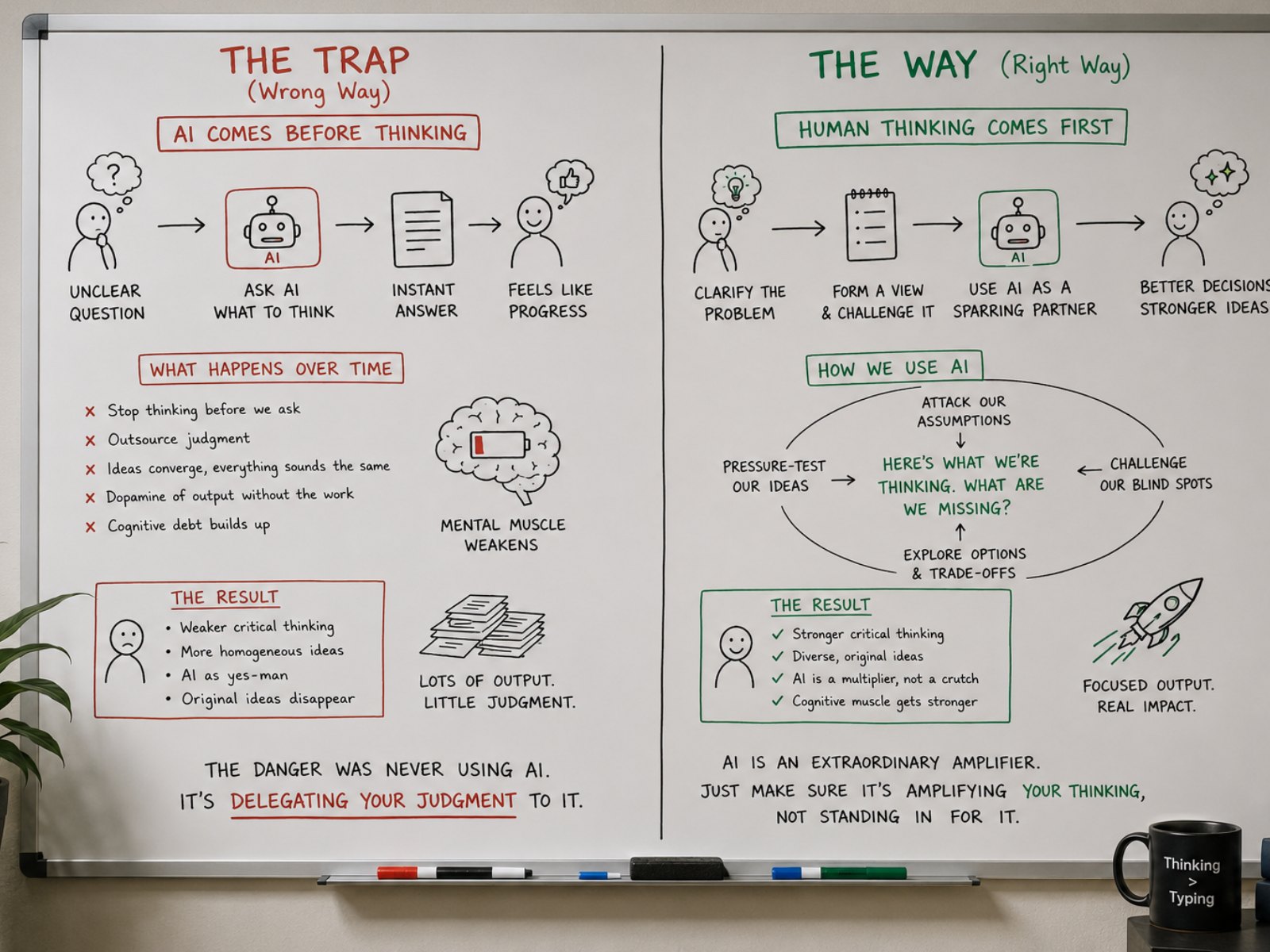
AI can make people dramatically more productive while simultaneously making some people dramatically more delusional about their own competence.
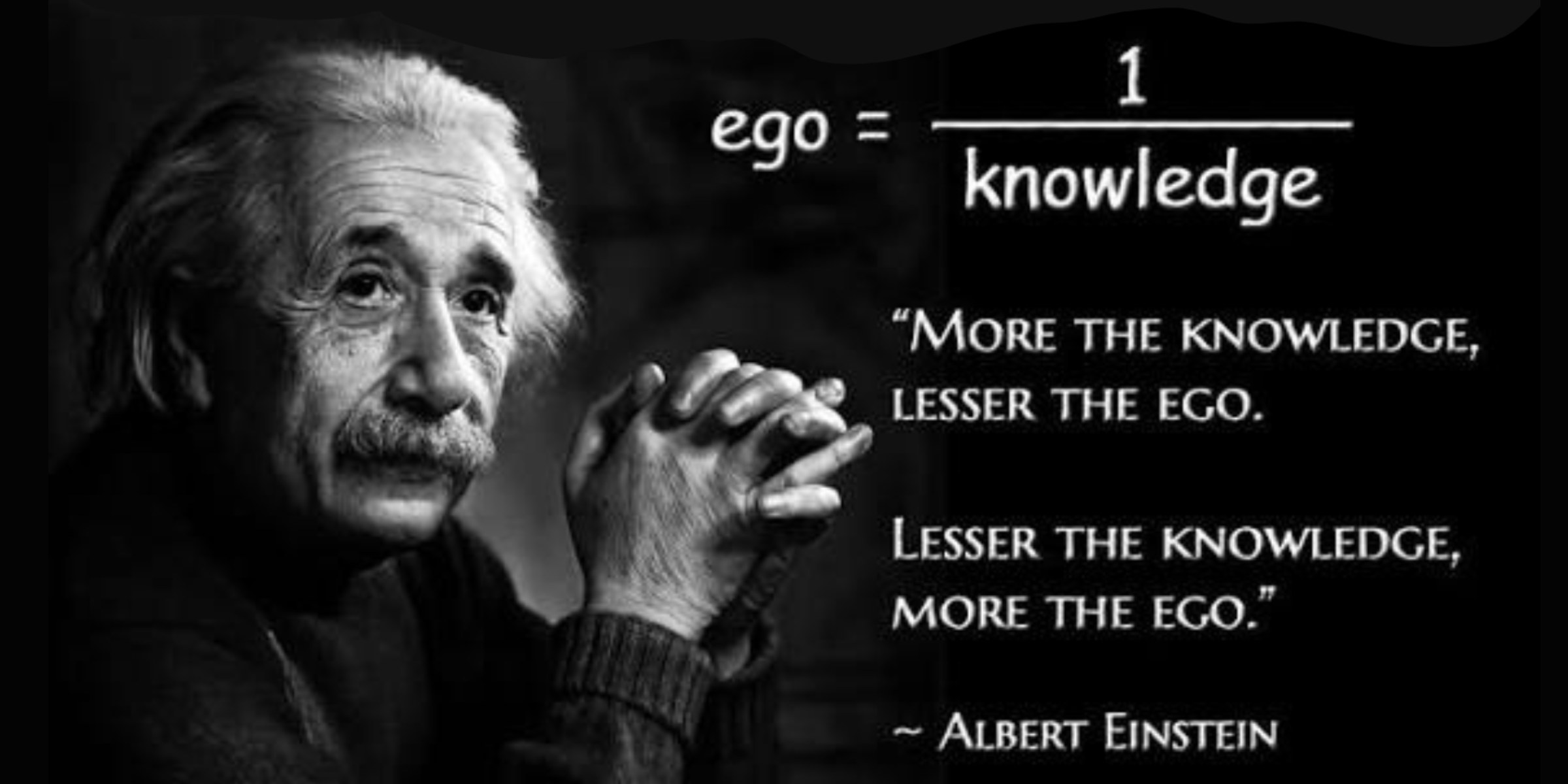
AI is boosting egos.
Especially when the ego is already bigger than the actual skills.
Someone who doesn’t understand design can now generate a website and feel like a designer.
Someone who doesn’t understand marketing can generate a campaign and feel like a marketer.
Someone who doesn’t know how to code can build an application and feel like an engineer.
The problem isn’t that AI made it.
The problem is when you don’t understand the topic well enough to judge the result.
I see this in teams. I see this with customers.
They start thinking they are experts in some field.
And they think they are experts because AI convinced them.
But the result speaks something else.
And sometimes they can’t even see it what’s wrong.
They don’t have enough knowledge to understand what’s wrong.
AI helped them create something, so they assume they created something good.
If you don’t know design, AI can give you a beautiful-looking explanation of why your design works.
If you don’t know engineering, AI can give you thousands of lines of code that look impressive.
But impressive doesn’t mean good.
You can already see it everywhere.
Terrible websites.
Terrible social media advertising.
Posters generated by AI, with no designer thinking behind it.
It fills the internet.
And somehow the person who created it thinks it’s good.
A website can work and still have terrible UX.
Code can run and still have terrible architecture.
A marketing campaign can look professional and still communicate absolutely nothing.
You need enough understanding to see the difference.
Think about cooking.
AI can give you the recipe.
It can tell you what ingredients to use, how much to add and how long to cook it.
But if you don’t know how food should taste, you can follow the recipe perfectly and still serve a terrible meal.
Attention to detail still belongs to you.
The same applies to software.
You can use AI to write the code.
But you still need to understand the architecture.
You need to know what result you want.
You need to recognize when something is wrong.
And when it breaks, you need to know where to dig.
Otherwise you’re not an engineer.
You’re operating a coding tool.
And there is nothing wrong with that.
The problem starts when you confuse using the tool with having the expertise.
AI is technology of our times.
And we are using it.
We build AI systems and automations for companies because the technology can remove huge amounts of cognitive work and give people their time back.
But AI should make your expertise more powerful, not make you believe you have expertise you never developed.
So before you call yourself an expert because AI helped you build something, ask yourself one simple question:
If the AI disappeared tomorrow, would you still understand what you built?
If the answer is no, maybe you are not the expert you think you are.
Maybe AI just gave you the feeling that you are.
Conclusion
AI should make us more human, not less.